What I Believed About Ex-Mormons

The narrative has changed a bit in recent years, but when I was young and through most of my life an ex-Mormon was a scary thing. Ex-Mormons were angry, bitter, vengeful, and dangerous. They wanted nothing more than to pull me out of the safety of the one true church. This was more than ‘misery loves company’: these people were actually in the power of the devil and were actively helping him tear down the truth. They had sinned against great light and so they deserved great condemnation (D&C 82:3).
I didn’t necessarily think these things consciously, but this was the underlying awareness. This viewpoint was made tenable because I didn’t actually know any ex-Mormons—at least not that I knew of. No one really admitted to being ex-Mormon. Someone might become inactive, but that just meant they were weak. To admit to being ex-Mormon meant being catapulted straight to wicked status.
What I Did to Avoid Becoming Ex-Mormon
Clearly, becoming ex-Mormon was the worst thing that could possibly happen to me. So I was very careful to safeguard myself. Of course, I did all of the things I was taught would keep me safe:
- I read the Book of Mormon everyday
- I attended the temple every other week
- I knelt in prayer night and morning and prayed throughout the day
- I attended church weekly, even on vacation
- I fasted and kept each Sabbath holy
- I watched every General Conference session
- I avoided anything that found fault with the church in even the smallest ways
- I never personally found fault with the church
- I avoided worldly thought:
- I wasn’t on social media
- I consumed only extremely ‘clean’ media
- All of my opinions were based on my understanding of the gospel
In spite of all this I wasn’t as narrow-minded as you might think. I read a lot and I enjoyed books and movies about other religions. I sometimes wondered why I got so much more spiritual understanding from reading books about Catholic saints than I did from reading the Book of Mormon. But of course I didn’t let myself entertain such thoughts for too long.
First Sign of Danger
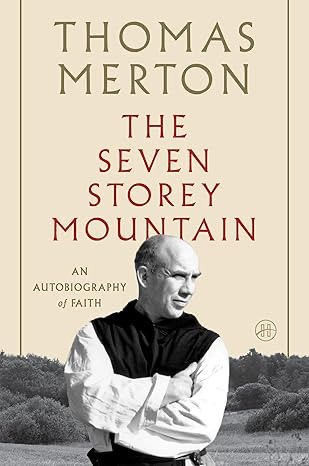
My faith in the LDS church received its first real challenge when I read Thomas Merton’s autobiographical book The Seven Storey Mountain. Merton’s experiences with God and inspiration were just like my own and those I’d hear about so often in the LDS church, but they had led him to the heart of the Catholic church. His faith, understanding, and sacrifice were as strong or stronger than the stalwarts in my church, so I couldn’t assume he had misunderstood God’s direction. But if the LDS church was the correct church why wouldn’t God lead him there?
I was shaken, and I was shaken by the fact that I was shaken. All my work to cultivate an unshakeable testimony of the LDS church and here I was—shaken! A scripture in Matthew is often paraphrased in the church: Even the very elect will be deceived. At this point it became clear that nothing I could do would make me exempt from danger. It was such a scary feeling! So I did what any self-respecting Mormon would do: I pushed my doubts aside and in every personal prayer I fervently pleaded, “Please help me to never believe anything that is not true.”
This was my constant prayer for the next 2 years.
To Avoid Becoming Ex-Mormon, Don’t Do These Things:
Pray
During one of those prayers as I asked for help to only believe truth, the question came to my mind, “If the church wasn’t true, would I want to know?” This seriously gave me pause, but I came to the conclusion, “Yes, if the church is not true I would want to know.” This commitment to caring more about truth than about my own beliefs felt significant, but I still had no doubt that I was in the right place and that I would never leave the LDS church.
Feel
However, within a year I suddenly found myself grieving and I wasn’t sure why. I had just dropped my youngest off for his first day of 1st Grade. I had looked forward to this day for 21 years and had planned to celebrate my first child-free day, but instead I found myself overwhelmed with sadness and driving home in tears. And I had no idea why.
Think
Now that my six kids were in school all day, I had time to process my mysterious sadness. It came down to this: I thought when my kids were all in school it would finally be time for me, but here I was and it didn’t feel like there was any Me left. I deeply felt the sacrifice of my body, my brain, my ambition, my youth, my freedom—my Self. And even though I had never allowed myself to acknowledge any of this, my deepest being was aware and grieving.
I realized I was living a life that I would never have chosen on my own. Domesticity was not part of my nature. I would never have chosen to get married at 20 to the man I married and then start having six kids right away. I became deeply aware of everything I had sacrificed to live the life I had been taught God wanted me to live. And I wondered if that was what God really wanted for me.
To my surprise, I found that I felt grumpy toward the church and its leaders for the first time. And I actually let myself feel it. I wondered why church leaders when I was young made it feel like having children was my only purpose, when that wasn’t the message my daughters were receiving. Had God changed His mind? Were the Prophets back then just teaching their cultural beliefs?
After I started thinking, the floodgates opened. I began questioning everything in my experience of the church.
- Why was the Relief Society so ineffective as a service organization?
- Had I found peace in Christ?
- Why was the church always trailing behind the world in social reform?
- Did the church deliver on its claim to be the ‘path that leads to happiness in this life’ for me personally?
- Etc
Ask
After two and a half weeks of exploring my feelings and having time to think, I found myself sitting on the edge of my bed asking a question that I’d asked many times before. But this time I asked without assuming I already knew the answer. I asked with an honest desire for truth. This time I asked with real intent:
“Is the church true?”
Read Part Two.
I’d love to hear from you! Contact me or leave a comment: