
Post-Mormon parenting from unconditional love sounds beautiful in theory.
Theory:
- We are endlessly calm
- We are endlessly wise
- We radiate endless patience
All while our kids melt down or make mistakes.

Reality:
- We get tired.
- We get triggered.
- We get overwhelmed.
- We find ourselves saying things we regret.
Basically, we melt down and make mistakes.

And then we wonder where all that love went and what’s wrong with us.
The Myth of Endless Availability
There’s nothing wrong with us! But unfortunately, if we grew up in a high-demand religion, we may have learned that love meant
- Always giving
- Always sacrificing
- Always putting ourselves last
This false ideal can make our limits feel like failures. But the truth is, needing rest doesn’t mean we’ve failed at post-Mormon parenting. It means—surprise!—we’re human. And it turns out, being human is inevitable and exactly what we’re meant to be.
In Mormon culture, self-sacrifice is idealized. We were taught to “lose ourselves in service” and that joy would somehow follow. As parents past conditioning can sneak in as an impossible standard:
- A loving parent never gets tired (false)
- A loving parent never needs time alone (so false)
- A loving parent never snaps (also, false)
When we don’t meet that standard–as we inevitably won’t, we can experience intense shame. We start to believe that we’re not just tired, we’re unloving–and unlovable.

So let’s toss that standard. It stinks. Unconditional love doesn’t mean we’re available every second. It means:
- Even when we step away, our love and acceptance remains steady.
- We can take a break without withdrawing affection.
- We can say, “I love you, and I need a few minutes to calm down.”
Let’s open ourselves to the fact that unconditional love doesn’t require providing about constant availability, it just means consistent connection.
So how do we maintain that connection in the face of our exhaustion?
Unconditional Love 0n Empty
Parenting is hard. Loving our kids consistently is hard. Feeling tired, frustrated, or even resentful at times doesn’t make us bad parents; it makes us real parents. And acknowledging this reality is the first step toward parenting from unconditional love—even on the days we feel empty.
But sometimes unconditional love looks like the opposite of what we expected. It doesn’t always look radiant and nurturing; sometimes it looks quiet, messy, and half-asleep.
When we’re running on fumes, success might mean staying connected, not calm or cheerful.
Maybe unconditional love sounds like:
- “I love you, and I need a break right now.”
- “I can’t help you yet, but I’m here.”
- “Let’s take a quiet minute together.”
Connection can happen through small gestures:
- Tone of voice
- Eye contact
- A gentle touch
These are low-energy ways to communicate “I’m still here with you.”
And if we’ve run completely dry? We can still love through honesty. Admitting, “I have nothing left right now” is not failure—it’s truth. And truth, spoken kindly, is love.

Repair, Not Perfection
Unconditional love doesn’t mean we never rupture; it means we learn to repair.
We will mess up:
- We will yell.
- We will withdraw.
- We will forget to listen.
But those mistakes don’t define us. What defines us is what comes next.
Now we have a chance to say:
- “I yelled, and I wish I hadn’t.”
- “You didn’t deserve that.”
- “I love you no matter what.”
Honest repair might heal more than a dozen perfect days ever could. Repair teaches our children:
- Relationships and connection are resilient.
- Humility.
- Forgiveness.
- Emotional safety.
Growing up in environments where love and approval were tied to obedience, we often internalized the idea that mistakes damage connection. Repairing with our children rewrites that story for us and them.
And part of repair is learning to forgive ourselves. Post-Mormon parenting from unconditional love isn’t about doing it right all the time—it’s about practicing presence and compassion, even when we fall short. Each time we choose to come back, we show our kids that love is durable.
Rest is a Form of Love
We can’t parent from unconditional love when we aren’t taking care of ourselves. Rest isn’t a luxury; it’s an act of devotion.
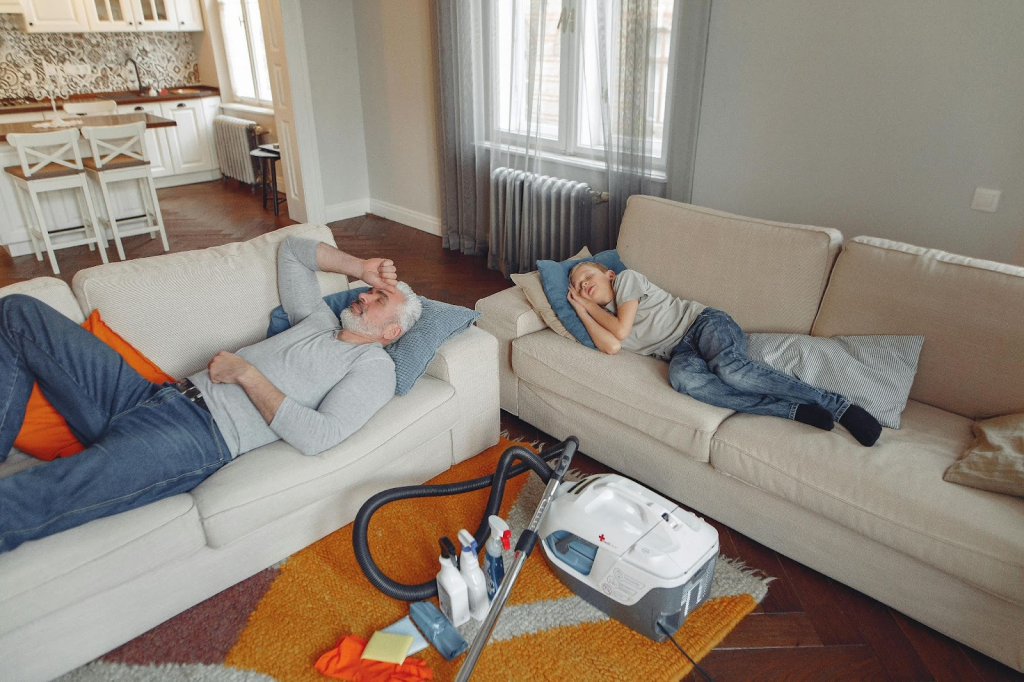
We need to meet our own needs:
- Taking quiet moments.
- Asking for help.
- Resting without guilt.
This isn’t selfish. We’re showing our kids what healthy boundaries look like.
Kyndsi Sundberg, a family therapist, reminds us that, “Parenting is exhausting, and no one expects you to be perfect all the time. On those days when you’re running on empty, take a break, lean on support, and be compassionate with yourself.”
In fact, rest is one of the purest expressions of unconditional love. It’s how we are able to stay soft, curious, and kind. Every time we choose to rest instead of pushing through, we model a truth our kids need to see: love doesn’t have to hurt to be real.

Conclusion
Parenting from unconditional love doesn’t mean being endlessly patient or perfectly calm. It means loving within our limits—and letting those limits become part of our humanity, not proof of our failure.
Tired love is still love. Imperfect love is still love.
When we stop using our exhaustion as evidence that we’re not enough, something softens. We remember that we don’t have to earn love either:
- Not from God.
- Not from our kids.
- Not from ourselves.
Even on our worst days, when we have nothing left to give, the simple act of staying connected keeps love alive.
I’d love to hear from you! Contact me or leave a comment: